

- Focus and Scope
- Section Policies
- Peer Review Process
- Open Access Policy
- Contact
- Author Guidelines
- Publication Ethics
- Copyright Notice
- Plagiarism Policy
- Artificial Intelligence Usage Policy
- Article Processing Charger (APC)
- Authorship
- Publication Frequency
Focus and Scope
Lex Lectio Law Journal is a scholarly journal published periodically, with a primary focus on the field of legal studies, encompassing both theoretical and practical aspects.
The scholarly articles published in Lex Lectio Law Journal cover a research scope that includes, among others, civil law, administrative law, constitutional law, business law, economic law, criminal law, Islamic law, international law, legal philosophy, customary law, law and technology, law and society, agrarian/land law, environmental and natural resource law, and maritime law.
Section Policies
Articles
 Open Submissions |
Indexed |
Peer Reviewed |
Peer Review Process
English
Lex Lectio Law Journal applies double-blind peer review process for each manuscript which involves editors and 1 (one) reviewer. Decision of article to be published in the journal considers several factors such as relevance of the article and its contribution to the development of accounting practices and accounting profession as well as compliance to the requirement of a published article. Editors and reviewers provide evaluation and constructive suggestions for the author.
Review process in Lex Lectio Law Journal consists of following stages, in which editor will provide decision on each stage.
- Detection of plagiarism using Turnitin software
- Initial review by editor
- Double-blind peer review process by 1 (one) reviewer
- Final review by editor
Lex Lectio Law Journal does not allow any plagiarism actions. All submitted articles will be screened using Turnitin software, to detect whether manuscripts contain plagiarism.
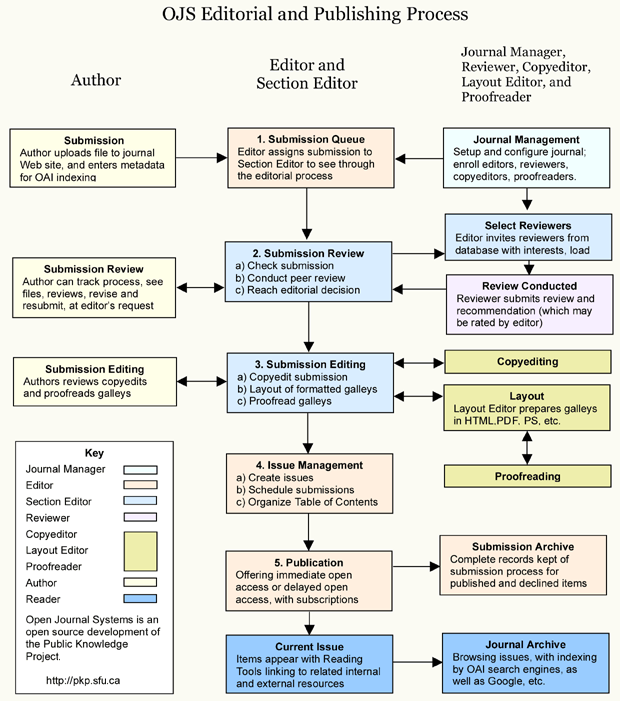
Editorial Process:
Open Access Policy
This journal provides immediate open access to its content on the principle that making research freely available to the public supports a greater global exchange of knowledge.
Contact
Program Studi Ilmu Hukum
Sekolah Tinggi Ilmu Hukum Graha Kirana
Jl. Kirana Raya No. 20-22 Medan 20112, Indonesia
Phone: +62 61 4521924
Website: STIH Graha Kirana
Email: [***]
Author Guidelines
Manuscripts submitted to Jurnal Hukum Lex Lectio must adhere to the following requirements:
1. A maximum of 4 (four) authors is permitted per manuscript.
2. Manuscripts may be written in either Indonesian or English.
3. Manuscripts must be original scholarly articles that have not been previously published in any form or medium.
4. Manuscripts must be free from plagiarism.
5. Manuscripts should be between 6,500 and 7,000 words in length, with a maximum limit of 20 pages.
6. Manuscripts must be formatted for A4 paper, using the Cambria font at 12 pt size, with single-line spacing and margins of 2.54 cm on all sides (left, right, top, and bottom).
7. The title of the manuscript must not exceed 12 (twelve) words.
8. Manuscripts must include at least 20 (twenty) references, with 40% (forty percent) of these references consisting of scholarly journal articles that are easily accessible to the public.
9. References and the bibliography must follow the Chicago Manual of Style, 17th Edition.
10. The structure of the scholarly manuscript must include the following:
a. Article title;
b. Author(s) name(s) (maximum of 4);
c. Author affiliation(s);
d. Author email address(es);
e. Abstract;
f. Keywords;
g. Introduction;
h. Methodology;
i. Results and Discussion;
j. Conclusion; and
k. Bibliography.
11. Order of the bibliography:
a. Books
b. Scientific journals
c. Dissertations / theses / undergraduate theses
d. Papers
e. Magazine / newspaper articles
f. Internet sources
12. The Editorial Board reserves the right to select and revise submitted manuscripts.
13. The author will be notified of the Editorial Board’s decision regarding the acceptance or rejection of a manuscript.
14. The content and opinions expressed in an accepted manuscript are the sole responsibility of the author.
15. Lex Lectio Law Journal reserves the right to reject manuscripts that do not meet the specified requirements.
16. The article structure and format can be downloaded via the provided template.
Example of how to write a bibliography:
Book
Asyhadie, H. Zaeni, Sutrisno, Budi. 2018. Pokok-Pokok Hukum Dagang. Depok: RajaGrafindo Persada.
Khairandy, Ridwan. 2009. Perseroan Terbatas: Doktrin, Peraturan Perundang-undangan, dan Yurisprudensi. Jogjakarta: Kreasi Total Media Yogyakarta.
Scientific Journal
Widodo, Viodi Childnadi, Kharisma, Dona Budi. 2020. “Problematika Perlindungan Hukum Terhadap Para Pihak Dalam Transaksi Layanan Urunan Dana Melalui Penawaran Umum Saham Berbasis Teknologi Informasi (Equity-Based Crowdfunding).” Jurnal Privat Law VIII (2): 230–360.
Sarfiah, Sudati, Hanung Atmaja, Verawati, Dian. 2019. “UMKM Sebagai Pilar Membangun Ekonomi Bangsa.” Jurnal REP (Riset Ekonomi Pembangunan) 4 (2): 1–189. . https://doi.org/10.31002/rep.v4i2.1952.
Dissertation / Thesis / Undergraduate Thesis
Z., A. Wangsawidjaja. 2011. “Problem dan Penyelesaian Pembiayaan Macet Pada Unit Usaha Syariah Bank Umum Milik Pemerintah.”, Disertasi Doktor Universitas Islam Negeri Jakarta. Jakarta, 2011.
Paper
Rahmadi, Takdir. 2009. “Peraturan Mahkamah Agung Nomor 1 Tahun 2008 tentang Mediasi di Pengadilan: Prosedur Penyusunan, Lingkup Muatannya dan Kaitannya Dengan Mediasi di Luar Pengadilan”, Makalah disampaikan pada Seminar Sehari tentang Legalitas Institusional Dewan Pers Sebagai Lembaga Mediasi Sengketa Pers. Jakarta, 5 Februari 2009.
Magazine / Newspaper Article
Santoso, Topo. 2004. “Prospek dan Urgensi Uji Materiil UU No. 32 Tahun 2004.” Hukum dan Pembangunan, 2004.
Anonim. 1995. “Sanksi Pelaku Pembajakan Diperberat,” Harian Republika, 24 April 1995.
Guntarto. 1995. “Adegan Pro dan Antisosial di TV,” Harian Kompas, 30 April 1995.
Internet
Iskandar, Yosea. 2020. “Equity Crowdfunding, Alternatif Pendanaan UMKM Yang Layak Diperhitungkan.” Https://Www.Hukumonline.Com/Berita/a/Equity-Crowdfunding-Alternatif-Pendanaan-Umkm-Yang-Layak-Diperhitungkan-Lt5f83c129a0cbd/ . Diakses pada tanggal 19 Agustus 2021.
IDX Channel; Siregar, Wahyudi Aulia. 2021. “Terdampak Pandemi Covid19, Ribuan UMKM Di Medan Akan Beralih Ke Security Crowdfunding.” https://www.idxchannel.com/economics/terdampak-pandemi-covid-19-ribuan-umkm-di-medan-akan-beralih-ke-security-crowdfunding. Diakses pada tanggal 14 Januari 2022.
Publication Ethics
Lex Lectio Law Journal employs a double-blind peer review process for the publication of its scholarly articles. The Author’s Guidelines emphasize the requirement for authors to declare that their submitted manuscript has not been previously published in any medium and is free from plagiarism.
As a scholarly journal, Jurnal Hukum Lex Lectio has a responsibility to ensure and guarantee that established publication ethics are upheld throughout every stage of the process.
Lex Lectio Law Journal follows the guidelines established by Committee on Publication Ethics (COPE) in all aspects of publication ethics. This statement outlines the ethical conduct expected of all parties involved in the process of publishing an article in this journal, including the authors, editor-in-chief, Editorial Board, peer reviewers, and the publisher.
Publication Decision
The Editorial Board has the authority to select articles submitted by authors. Guided by the policies established by the Editorial Board, the editors evaluate and select articles that have successfully passed the peer-review process for acceptance and publication. During the review process, the Editorial Board must consider potential issues such as copyright infringement, defamation, or plagiarism; in such cases, the Editorial Board may engage in open discussions with the peer reviewers. Furthermore, the editors must ensure equitable treatment for all authors, without discrimination based on race, nationality, gender, sexual orientation, religion/belief, or political or philosophical orientation.
Confidentiality
The Editorial Board and editors are under no obligation to disclose information regarding submitted manuscripts or the identities of the authors to any third party, including—but not limited to—other authors or reviewers. The Editorial Board is prohibited from revealing the identities of reviewers to the authors. Unless otherwise determined by the Editorial Board, all submitted manuscripts must remain confidential and may not be discussed openly. Unpublished manuscripts may not be used by the editors or the Editorial Board without the prior consent of the respective authors.
Copyright Notice
English
Authors who publish with this journal agree to the following terms:
- Authors retain copyright and grant the journal right of first publication with the work simultaneously licensed under a Creative Commons Attribution-ShareAlike 4.0 International License that allows others to share the work with an acknowledgement of the work's authorship and initial publication in this journal.
- Authors are able to enter into separate, additional contractual arrangements for the non-exclusive distribution of the journal's published version of the work (e.g., post it to an institutional repository or publish it in a book), with an acknowledgement of its initial publication in this journal.
- Authors are permitted and encouraged to post their work online (e.g., in institutional repositories or on their website) prior to and during the submission process, as it can lead to productive exchanges, as well as earlier and greater citation of published work.

Plagiarism Policy
English
Plagiarism is the unethical act of copying someone else’s prior ideas, processes, results or words without explicit acknowledgement of the original author and source. Self-plagiarism occurs when an author utilizes large part of his/her own previously published work without using appropriate references. This can range from getting the same manuscript published in multiple journals to modifying a previously published manuscript with some new data.
Types of Plagiarism
Full Plagiarism: Previously published content without any changes to the text, idea and grammar is considered as full plagiarism. It involves presenting exact text from a source as one’s own.
Partial Plagiarism: If content is a mixture from multiple different sources, where the author has extensively rephrased text, then it is known as partial plagiarism.
Self-Plagiarism: When an author reuses complete or portions of their pre-published research, then it is known as self-plagiarism. Complete self-plagiarism is a case when an author republishes their own previously published work in a new journal.
Please Note:
1. Full plagiarism, partial plagiarism, and self-plagiarism are not allowed.
2. The authors should ensure that they have written entirely original works, and if the authors have used the work and/or words of others that this has been appropriately cited or quoted.
3. An author should not in general publish manuscripts describing essentially the same research in more than one journal or primary publication. Submitting the same manuscript to more than one journal concurrently constitutes unethical publishing behavior and is unacceptable.
Proper acknowledgment of the work of others must always be given. Authors should cite publications that have been influential in determining the nature of the reported work.
Screening Plagiarism
The editor will run a plagiarism check using turnitin for the submitted articles before sending it to the reviewers. We do not process any plagiarised contents. If an article has over 20% of plagiarism based on the result of the check, the article will be rejected. The journal is carried out by using Mendeley or Endnote as a Tool Reference Manager.
Artificial Intelligence Usage Policy
The use of AI is prohibited for the following purposes: fabricating or manipulating data, plagiarism, creating fictitious references, generating misleading information, infringing upon copyright, disclosing confidential data, or substantially replacing the author’s own intellectual contribution. AI cannot be listed as an author or co-author, as it lacks the capacity to assume academic responsibility for scholarly work. Authors bear full responsibility for the accuracy of information, the validity of data, the precision of analysis, the originality of the manuscript, and all references employed. Any use of AI that contributes to the creation or development of substantive content, supports data analysis, or influences scientific argumentation must be disclosed transparently—whether within the research methodology section, the acknowledgments, or a dedicated statement regarding AI usage, depending on the nature of its application.
Editors and peer reviewers are authorized to evaluate compliance with this policy through examination, requests for clarification, or requirements for manuscript revision. AI must not be used to make independent decisions within the editorial and peer-review processes. Violations of this policy may result in the rejection of a manuscript, the rescinding of an acceptance, the retraction of a published article, notification to the author’s institution in cases of serious misconduct, or restrictions on future manuscript submissions. Authors have the right to appeal an editorial decision by submitting a written request to the Editor-in-Chief. This policy is based on the principles of scientific publication ethics—including the guidelines of the Committee on Publication Ethics (COPE) and may be updated periodically to reflect technological advancements and evolving standards in scientific publishing.
Article Processing Charger (APC)
This journal charges the following author fees.
Article Submission: 0.00 (IDR)
Article Submission Charges FREE
Authors are not charged an Article Processing Charge (APC) at any stage of the publication process. If a manuscript is accepted for publication, authors are not required to pay any publication fees whatsoever.
Authorship
All authors must make a significant contribution in the following areas:
1. Conception and design of the research, data collection, or analysis and interpretation of data.
2. Drafting the manuscript or critically revising it to ensure substantial intellectual quality.
3. Providing final approval of the version of the manuscript to be published.
Furthermore, all authors must take responsibility for every aspect of the scholarly work produced and ensure that any issues regarding the accuracy or integrity of the research are thoroughly addressed and resolved.
The journal’s editorial board generally does not consider changes to authorship once a manuscript has been written. Therefore, authors are expected to carefully consider the list and order of authors prior to submission and to establish the final author list at the time of the initial submission.
The journal’s policy regarding changes to authorship is as follows:
1. All authors must be listed in the manuscript, and their authorship information must be provided within the manuscript submission system.
2. Any changes to the author list including the addition or removal of authors, or a change in the order of authorship must be requested before the manuscript is accepted and require the approval of the journal editor.
3. Requests for changes to authorship must be submitted by the corresponding author, accompanied by a justification for the change and written confirmation from all authors (including those being added or removed) expressing their consent to the change.
4. Only under exceptional circumstances will the journal editor consider changes to authorship after a manuscript has been accepted for publication.
5. The publication process may be delayed while a request for a change in authorship is under consideration.
6. If the journal editor approves a change in authorship after an article has been published, the journal will issue an official correction (corrigendum).
7. Changes to authorship made without proper approval may result in the rejection of the manuscript or, if the article has already been published, the retraction of the article.
Publication Frequency
2 Issue per year (April and October)